

Jedi Brain
An Affliction for Our Times

The tragic conflict in Ukraine naturally invokes strong emotions in those concerned with human suffering, both those who are appalled by it and those who seem to feel the suffering is fine, but should be refocused. This latter group makes up a significant section of politicians from both major parties and a good bit of the internet, only a minority of whom are actual Ukrainians or Russians but who have, through the magic of mass media propaganda, come to believe that this terrible armed conflict, far away, represents some kind of cosmic battle between good and evil, the outcome of which bears on their lives directly. Ukrainians and Russians stand to lose a lot depending on how things go for their respective sides, their European neighbors considerably less, and Americans not so much at all. Yet for many of the latter, despite the US not being directly involved, the War in Ukraine is existential. If the Ukrainians do not prevail, then America, in some way, will lose “freedom” and “democracy,” notwithstanding that those things- such as they were- disappeared long ago and are not missed.
The emotional investment in the outcome of this conflict I would judge more extreme than even the War on Terror, which involved actual American armies in combat. It is also of a different type. The sentiments expressed are strongly felt, but a step removed from reality in a way that was impossible with a war that could result in actual mass-casualty terrorist attacks on US soil. In a lot of ways, for good or bad (mostly bad) it's redolent not of normal propaganda drummed up in the mass media to support the various foreign policy adventures of factions of the Deep State, but of the groups that coalesce around that same mass media’s other consumer output- fandoms. The framing of the war in American popular culture and its locus of attention as the great battle of our time are, in a sense, the product of a particular kind of conditioning that produces a distinct sort of outlook, something I’ve dubbed “Jedi Brain.”
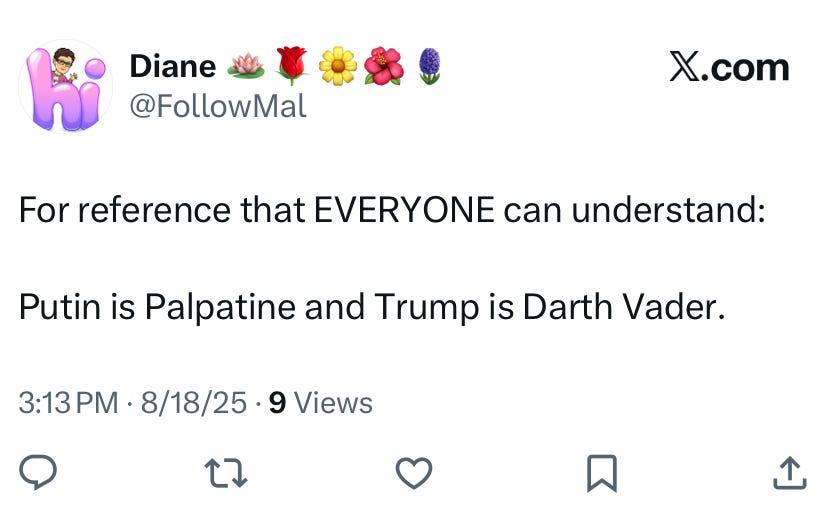
She should be writing for the Atlantic.
Jedi Brain is a term (I’ve also heard Disney Brain, Marvel Brain, and the like) for a mental state wherein people’s main frame of reference for understanding politics, war, and the interrelationship between them is mass media entertainment products. There are good guys and bad guys, each occupying a respective political identity, and it is the job of the former to seek a more just order by destroying the latter. Narrative coherence tends toward the personification of each side in small groups of heroes on the one hand and one big villain on the other. This latter figure is the wellspring of Team Evil’s grand scheme; if he is destroyed, so goes with him all the bad stuff he represents.
By way of example, this was left as a comment on a restack I posted a couple of days ago, and I thought it perfectly illustrated what I mean.
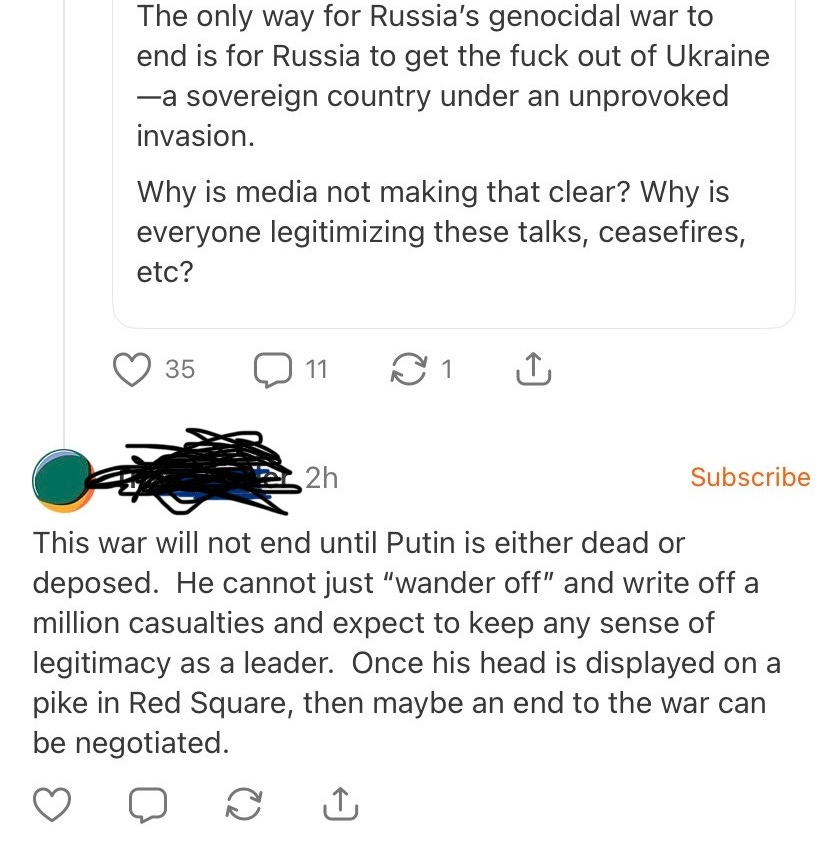
The OP is theatrically angry at the notion that anyone would even think about peace talks; the “only way” for the war to end is for Putin to leave Ukraine immediately, in toto. When I pointed out that there is no force available to compel Putin to leave, meaning that he will either have to be persuaded to do so or magically just develop a case of ADD and meander off towards something more interesting, the below commenter responded by doubling down. For him, the only way the war will end is if Putin is dead.
Notice that, first off, both of these posters are oblivious to another, far more likely way the conflict might end- Putin continues to wage war, thousands more people die, and he ends up conquering far more territory than he already has, forcing the Zelensky government out of power and leaving a rump Ukraine under his domination. I say likely; this scenario is in fact pretty much inevitable given the war’s current trajectory. Ukraine does not have the manpower and resources to win a war of attrition against its much larger and more powerful neighbor, and the countries that support Ukraine lack the material wealth, industrial base, and political will to make up the difference. Putin’s government isn’t going anywhere; the Russia economy isn’t going to tank. All the propaganda predicting these things has proven wholly false and in some cases ridiculous. Anyone urging on the war at this point must address those obvious facts, or else what they’re advocating is simply delusional.
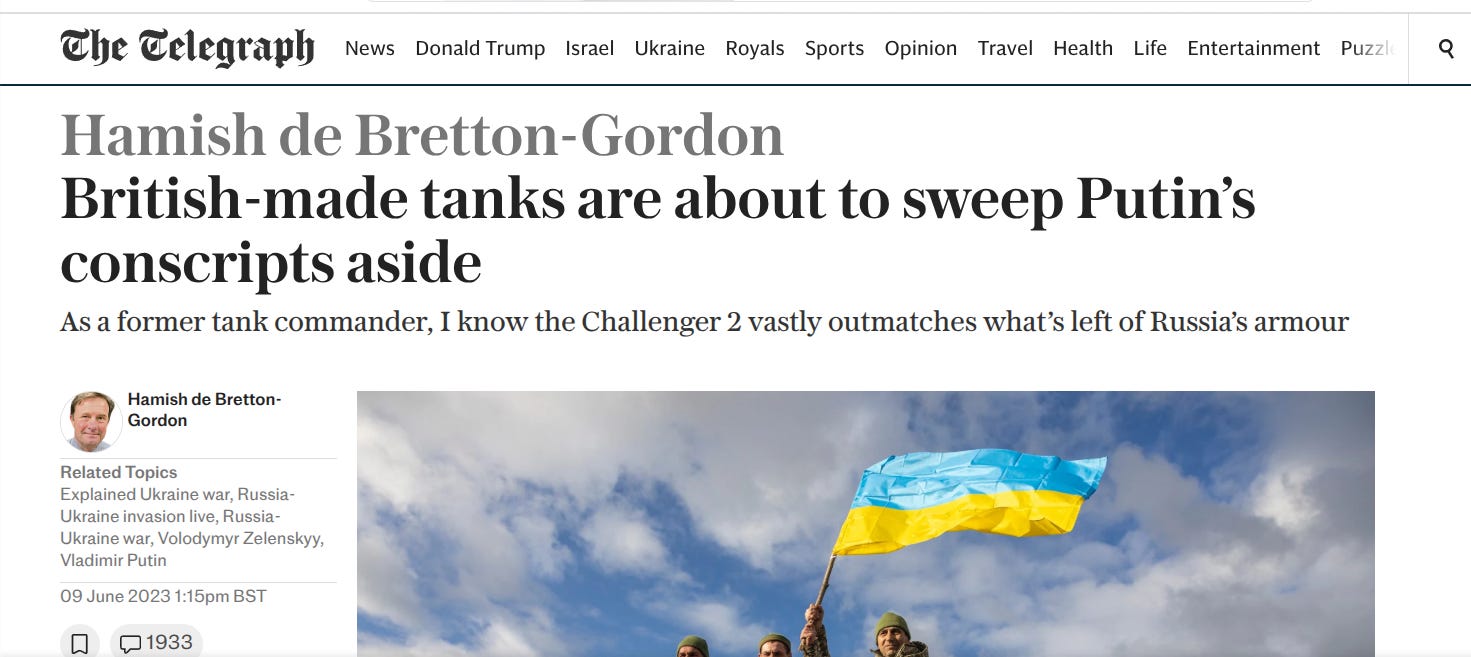
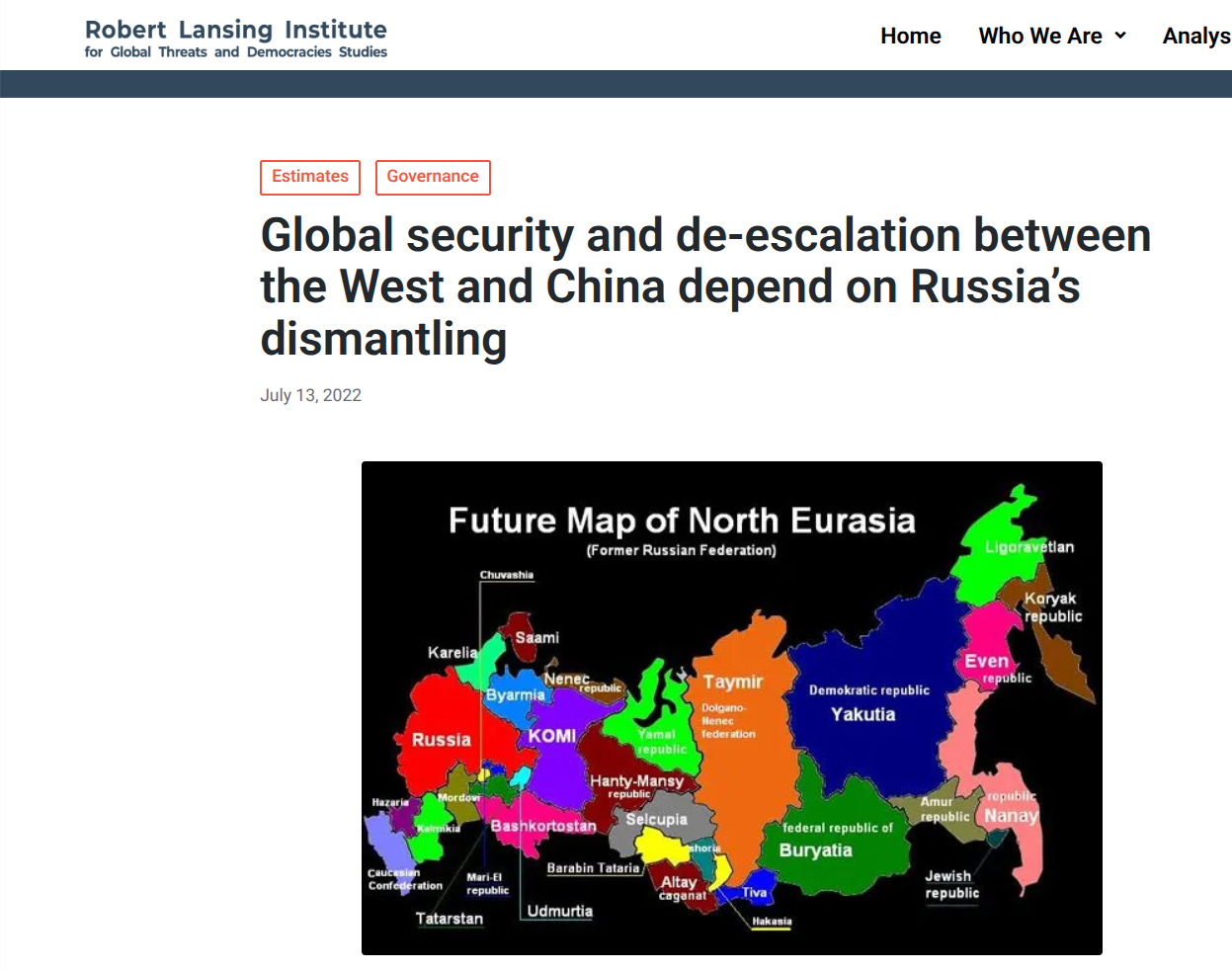
Remember stuff like this… good times.
Looking again at the comments, you can see this fantasy narrative understanding of the war undergirding the thought of the OP and the commenter. The war is Putin’s personal evil project, begun by him solely due to his desire to harm others (“unprovoked”) and is thus bound up with him. No Putin, no war, whether one means its inception or its end. Thus, to the commenter, the war is not merely likely to end upon Putin’s death, but that is in fact the necessary and sufficient condition for it to do so.
None of this is based on reality. The war that began in 2022 is merely the continuation of fighting that started in 2014, itself the result of intrigues between NATO and Russia, the former seeking to prevent the latter from evolving into a regional hegemon by expanding a “defensive” alliance to its doorstep. This in turn stems from unresolved issues from the Cold War, WWII, and even the Russian Empire. The War in Ukraine is not the product of Putin’s supervillain idiosyncrasies; it’s instead the sad but natural result of the inability of major powers to realign peacefully. If Putin were dead, either of natural causes or some act of war, he would be succeeded by someone who would almost certainly continue the fighting, and if Putin had been harmed by enemy action, it’s likely the conflict would take on even harsher dimensions.
While largely unsuccessful in driving Putin from Ukraine, the Biden Administration was far better able to stop “Baghdad Vlad” in Iraq.
Nor, if the Russians departed Ukraine tomorrow, leaving it with its 1991 borders, would the killing end. The original problems would all remain, especially a restive and now highly militarized population who consider themselves Russians in Ukraine’s midst. The OP and the commenter seem to assume this issue, the original causus belli, will just evaporate if the government in Kiev rules the Donbas and Crimea once more. Similarly unaddressed would be the rampant corruption and political gangsterism that characterized Ukraine before the war. What was once a semi-failed state of 44 million people is now a war torn, completely failed state of perhaps 33 million, wholly dependent on outside support, also now without young people. The OP and the commenter think the biggest problem with Ukraine is that it’s not big enough.
It’s understandable, even noble, for Ukrainians to cling to hope of victory. It’s far less excusable for people otherwise unimpacted by the conflict to do so. If one’s Standing With Ukraine is limited to switching his profile picture to a blue and yellow flag and reposting warmed-over twaddle from “Intelligence Community” hacks, it’s difficult to see any virtue in his urging other people, far away, to die for a cause to which he contributes mainly by hitting the like button a few hundred times a day.
Jedi Brain is ultimately the legacy of the great Boomer peace that followed WWII. That war became the essential frame of reference for understanding armed conflict from its end until today. Note that the Boomers came of age a generation after WWII, and lived in its shadow rather than having some collective memory of participation. The largest generation in American history grew up in a world shaped by militant liberal democracy, their fathers having embarked on a noble crusade of good versus evil, the results of which were (for Americans) unambiguously positive, or at least pitched that way. The war indeed led to an unprecedented wave of prosperity and security in which, for the first time, the vast majority of the population was protected from things like poverty, violence, and political radicalism.
This final point is key; Jedi Brain is a form of groupthink that flourishes largely (but not exclusively) among people who expect neither to suffer nor inflict violence themselves. They are secure from it. For them, killing people is an abstract question decided on the basis on whether the good guys will be helped by it, which will in any case occur far away. Negative forces in the world are under the direction of supervillains, who must be destroyed for good to flourish, and upon their destruction peace, harmony, and the sort of personal safety and well-being the Jedi-Brained individual has will simply arise as a kind of emergent property of his noble efforts, or rather the noble efforts of the heroes who will engage in the actual violence, far from the clatter of keyboards. It’s not only neocons who think that every third-world dictator is Adolf Hitler; it’s arguably the default way most of the population now imagines the world, even if only implicitly.
But it’s Jedi-Brained people who are in a position to inflict harm on others who pose the real problem. The best example of this in modern times is the George W. Bush administration, which essentially viewed the War on Terror as a epic battle against evil masterminds Osama bin Laden, the Taliban, various Ayatollahs, Bashar al-Assad, Saddam Hussein, and an entire rogues’ gallery besides, the destruction of whom would allow the peoples they terrorized to adopt, fairly immediately, the peaceful government and liberal values to which they were naturally inclined. Shock and Awe got a lot of planning- the rebuilding, not so much, since it was assumed that it would all just kind of automatically work out, a line of thinking that parallels movies where, once the big-bad is destroyed, the plucky rebels just celebrate the glorious future seamlessly and frictionlessly coming into being.
“What should we expect in Baghdad, sir?”
“The president said to watch this video and it will just basically be like that.”
“Ewoks and implied incest?”
“Are you trying to be a captain forever, dips***? Just go with it.”
I noted earlier that the Boomer frame of reference for all wars is WWII. One might expect instead that Vietnam would figure more profoundly in their imaginations, given that it was essentially a defining event of their generation, but the Silent experience of the Second World War was quite different and formative upon their children in a way the latter’s own war never was. WWII was the last true mass-mobilization of liberal democratic societies, a phenomenon that went back to the French Revolution and marked the ascendancy of Enlightenment rationalism and organizational ability, nationalism and industry wedded into a potent force. The managerial regime that grew out of that new order was so successful that it created weapons capable of destroying humanity as a whole, and thus, wars would become more limited and technocratic- still killing a lot of people, of course- but involving carefully selected members of the population that the managerial elites deemed replaceable and sometimes politically problematic in any case.
Black men like Sgt. Lincoln Osiris were considered expendable by the elites who sent them to Vietnam, as depicted in this documentary.
Vietnam, unlike WWII, was a war most Americans experienced through mass media rather than direct impact. It was the first TV war, the first war as living room spectacle, drama for the homefront as the brave and the unlucky died abroad for goals that were always both vital and nebulous. Mediated violence became the norm, a trend noted by Baudrillard with the first Gulf War, and continued on into the brief age of liberal triumphalism between the fall of the Soviet Union and the attacks on 9/11. It lingers still.
Politics- sublimated violence- follows the same trajectory. One can see Jedi Brain on full display deployed against Donald Trump and his MAGA storm troopers, right down to the “Resistance” imagery from the terrible new Disney trilogy being circulated among those terrified at his election in 2016. In addition to being Darth Vader, he’s also Hitler, and also Voldemort, because to the people who deploy those allusions, they’re all the same thing. The boundaries between fiction and reality collapse into a media machine that undifferentiates them, blending them into a narrative where the evil on a page or a screen is the same whether it’s a dark wizard, a wrestling heel, a murderous dictator, or a random internet istophobe. The proper response to any evil, which is all evil, is to demonstrate emotion comprehensible and acceptable to others with whom you wish to identify, in much the same way the public expression of consumer choices validates one as a member of a fandom. Zelensky and the latest Dr. Who trailer- liked and reposted, of course- it’s just the right thing to do.
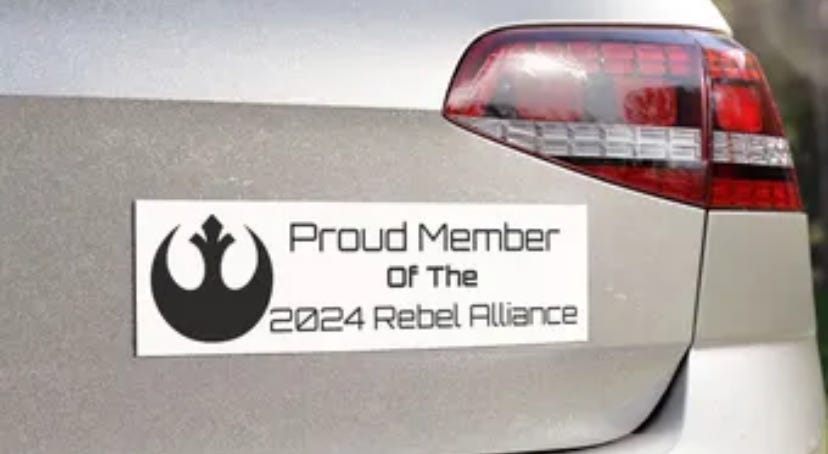

So what’s the cure for Jedi Brain? Unfortunately, it’s the same remedy for all afflictions born of ease and abundance- suffering. There’s the harsh physical suffering of actual combat, which blessedly so few of us know (I’m not one of them). But there’s also the path of simply taking a stand in the face of unpopularity, abuse, and ridicule. It’s saying that, as a citizen of the United States and a responsible American, I call upon my government to do what it can to secure peace and an end to the death and destruction insofar as it is able, and in any case, to no longer fund and support this catastrophe. I expect I’ll see things like the below in my comments, h/t Oceanus:
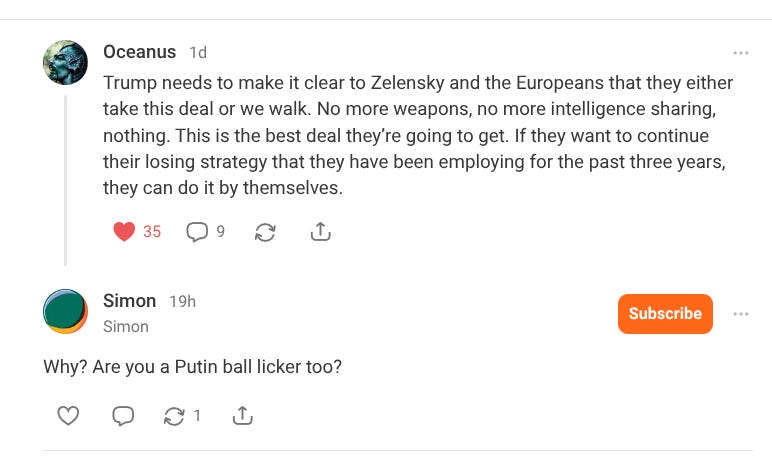
To them I offer this link and instructional video:
The good news is you still have time to avoid being a Putin ball-licker and enlist in the Ukrainian Army while there are plenty of Dark Side Nazi Dalek Death-Eater Russians to kill. The bad news is that that window may be closing fast. President Trump, animated by his businessman’s trust in deals, his vanity, and apparently his genuine awareness of his own mortality, is seeking peace. Some people doubt the prospects; I’m hopeful.
μακάριοι οἱ εἰρηνοποιοί, ὅτι αὐτοὶ υἱοὶ Θεοῦ κληθήσονται.
It's the interest of all civilized people to see peace in Ukraine, the dissolution of NATO, and friendship between Russia and the United States.
Anything else is bullshit.
President Trump just held a tense meeting with Ukrainian President Volodymyr Zelensky and several European leaders in Washington — and the photos looked more like a teacher scolding students than world leaders negotiating peace.
The big issue on the table? “Security guarantees” for Ukraine. But let’s be honest, when politicians use that phrase, it almost always translates into more American involvement — our weapons, our money, our bases, and maybe even U.S. troops on the ground. That’s not what Americans voted for! No more wars!